

What if managing money more reliably had less to do with trying harder and more to do with making fewer things depend on memory? ADHD can make bills, due dates, and account details hard to keep in view. A complicated budget may be tough to start, while impulsive spending or avoiding money tasks can bring stress and self-criticism. These challenges aren’t a character flaw. ADHD and money management strategies work best when they account for how planning, working memory, and impulse control can affect everyday tasks.
You don’t need a perfect budget or a burst of willpower to begin. This guide will help you build a practical system that fits your needs, with small routines and reminders that carry more of the load. You’ll learn ways to organize bills, make spending easier to track, and set up short money check-ins, along with options for tools or human support. Start with one manageable step, then adjust the system as you learn what works for you.
Key Takeaways
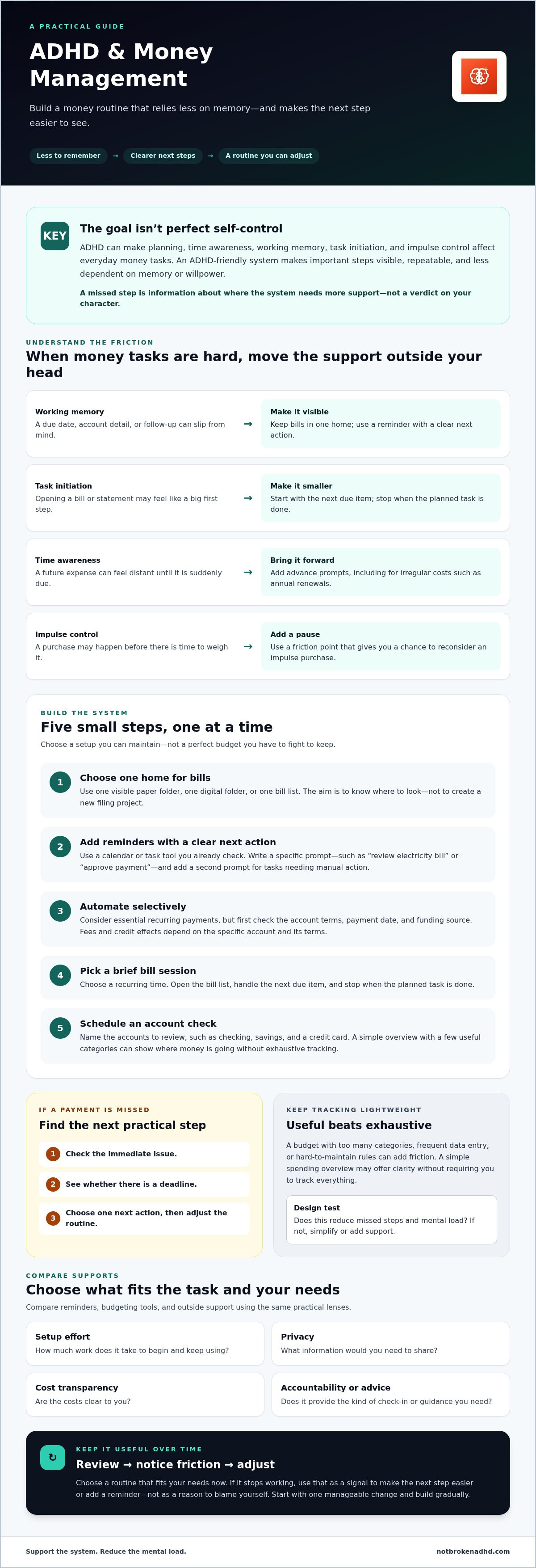
- ADHD can make financial tasks harder through challenges with planning, time awareness, and getting started. Understanding the friction can help you choose supports without blaming yourself.
- Build your system in small steps, and check account terms before setting up automatic payments.
- Compare reminders, budgeting tools, and outside support by setup effort, privacy, cost transparency, and the kind of accountability or advice they provide.
- When spending or a missed payment feels stressful, focus first on the deadline and the next practical action. A pause or other friction point can also make impulse purchases easier to reconsider.
- Choose adhd and money management strategies that reduce missed steps and mental load, then adjust your routine as your needs change.
Why ADHD can make money management feel harder, and what can help
A bill can sit unopened even when you care about paying it. A purchase can happen before you’ve had time to weigh it, and after a missed due date, shame may make checking your account feel even harder. These experiences aren’t proof that you’re careless or bad with money. They can reflect how ADHD-related differences in planning, working memory, time awareness, and task initiation make everyday financial steps harder to manage.
ADHD affects people differently. Some may struggle most with remembering bills; others may find spending decisions or getting started on paperwork more challenging. You don’t need to identify with every example to benefit from a system that reduces the number of steps you must hold in mind. The goal of ADHD and money management strategies isn’t perfect self-control. It’s to create external reminders and repeatable routines that make the next step easier to see and do.
How executive-function demands show up in everyday finances
Executive functions are mental skills involved in organizing actions, managing attention, and regulating impulses. This overview of executive functions offers more background. In daily money tasks, working memory can affect whether you remember a due date, account detail, or follow-up after a payment problem. The information may matter to you, but it can slip out of mind when other demands compete for attention.
Task initiation can make opening a bill or reviewing a statement feel like a surprisingly large first step, especially if you expect confusing details or bad news. Time awareness can also make future expenses feel distant until they’re suddenly due. A recurring bill may be predictable, while an irregular cost, such as an annual renewal, can be easier to overlook when it isn’t part of the usual monthly rhythm.
Why shame and overly complex budgets can get in the way
Missing a payment or falling behind on tracking doesn’t mean you don’t care. It may mean the system relied on remembering, starting tasks at the right time, or repeating too many steps without support. If a budget has lots of categories to update, frequent data entry, and rules that are hard to maintain, it may create more friction than clarity. A simpler approach can be more useful than an ideal plan that’s difficult to keep using.
An ADHD-friendly money system makes important financial steps visible, easy to repeat, and less dependent on memory or willpower. That can include a reminder you’ll notice, a short check-in, or a clear place to keep bills and account information. The right setup is personal, and it can change over time.
If you’ve missed a payment or stopped using a budget, you don’t have to fix everything at once. Start by finding the immediate issue, checking whether there’s a deadline, and choosing one next action. Then adjust the routine that didn’t hold up. A lapse is information about what needs more support, not a verdict on your character.
How to build a simple ADHD-friendly money system step by step
Start with a setup you can maintain, not a perfect budget. These adhd and money management strategies help move key steps out of your head and into reminders, routines, and tools you already use. You can build the system gradually.
- 1. Choose one home for bills. Keep paper bills in one visible folder, or use one digital folder or bill list. The aim is to know where to look, not to create a new filing project.
- 2. Add reminders with a clear next action. Use a calendar or task tool you already check. Set a prompt ahead of the due date that says what to do, such as “review electricity bill” or “approve payment.” Add a second prompt for tasks that need manual action, in case the first one gets missed.
- 3. Automate selectively. Consider starting with essential recurring payments, but first confirm the account terms, payment date, and how the payment is funded. Overdrafts, missed-payment fees, and credit effects depend on the specific account and its terms, so check with the relevant provider if anything is unclear.
- 4. Pick a brief bill session. Choose a recurring time to review upcoming bills and complete actions that aren’t automated. Make the session easy to begin: open the bill list, handle the next due item, and stop when the planned task is done.
- 5. Schedule an account check. Add a short recurring check-in and name the accounts to review, such as checking, savings, and a credit card. A simple spending overview with a few useful categories can show where money is going without requiring exhaustive tracking.
Set up bill reminders and payment routines
Specific prompts are easier to act on than a vague “money” reminder. Include the bill name, due date, and one action. For example: “Phone bill, review and pay” is clearer than “check finances.” If you need to approve each payment, schedule both an early reminder and a backup prompt near the due date. CHADD also shares practical suggestions for managing money with ADHD, which may help you think through routines that fit your needs.
Make spending and account checks easier to repeat
Choose a few categories that help you make decisions, such as bills, everyday spending, and savings. You can refine them later if they aren’t useful. Keep your check-in focused: look for upcoming bills, confirm balances, and note one next step. External reminders make the next money task visible, so you don’t have to rely on memory alone.
If you’d like more support with the executive-function side of building routines, explore these executive-function resources as an educational starting point.
Which ADHD money-management supports should you compare?
The right support depends on what’s getting in the way. You might need a reminder to pay bills, a clearer view of spending, help following through, or qualified guidance on a financial decision. No single tool or service is the best fit for everyone, and it’s reasonable to weigh setup effort, privacy, cost transparency, accountability, and the type of advice offered.
Self-guided tools, accountability, and professional support
Calendar alerts, task lists, and budgeting tools can make due dates and spending easier to see. They’re often flexible, but they still take some setup and regular use. Compare what information a tool asks you to share, how clear its notifications are, and whether fees or paid features are explained upfront.
A trusted person may help with a check-in or sit beside you while you organize bills. Agree on the purpose, what information you’re comfortable sharing, and how often you’ll connect. Consent and clear boundaries matter; support should feel collaborative, not like someone taking control of your finances.
ADHD coaching may focus on planning, routines, and follow-through. Therapy addresses emotional or mental health concerns, while financial planning may focus on goals and financial decisions. These roles aren’t interchangeable, and qualifications vary. If you need help with debt, taxes, investments, or legal questions, look for a professional qualified for that specific area. Check their credentials, fees, and what they’re able and authorized to advise on. The ADHD Field Guide offers educational resources about executive function, but it doesn’t provide financial advice or personalized planning.
How to choose a tool you’re more likely to keep using
Choose something easy to access, with low setup effort and notifications you’ll notice. Consider what happens if you miss a check-in: can you restart without rebuilding the whole system? Try one tool or routine first, such as a weekly calendar reminder to review bills, before adding more apps or tracking categories. A short test can reveal whether it genuinely helps or simply creates another task.
As you compare adhd and money management strategies, look for a support that fits your privacy preferences, energy, and access to help. For ideas about building routines around executive-function needs, explore Executive Functioning: Neurodivergent Guide (2026) and its executive functioning strategies. The useful choice is the one you can return to, even after an imperfect week.
Managing impulsive spending, avoidance, or missed payments
A stressful money moment can make it tempting to avoid the account or try to fix everything at once. Pause and get specific: What’s the immediate issue? Is there a deadline? What’s the next action you can take? That action might be checking a due date, reviewing a transaction, or contacting the provider. Clarity first. You can make a broader plan after you know what needs attention now.
Create a pause between an urge and a purchase
An unplanned purchase isn’t a character flaw, and not every spontaneous purchase is harmful. If you want more time to decide, try adding a small pause that feels supportive rather than punitive:
- Save the item to a wish list and set a reminder to reconsider it later.
- Remove saved payment details so checkout takes an extra step.
- Before buying, notice what’s happening. Are you tired, excited, stressed, or responding to a limited-time offer?
These options aren’t rules you have to follow. Choose one that fits your life and feels safe. If a strategy creates more stress than help, adjust it.
Restart after avoiding bills or missing a routine
If you’ve put off opening bills, shrink the task. Open one statement. Check one due date. Write down one next step. You don’t have to catch up on every account in a single sitting. For ideas on breaking financial tasks into smaller steps, the article “ADHD Task Management: Breaking Big Goals Down” may offer a useful framework.
If a payment is late or you’re unsure what happens next, contact the provider promptly and ask about your current options. Confirm the account terms directly. Fees, payment arrangements, and other consequences vary by provider and account, so don’t assume a particular outcome before you check.
Restart rule: Resume at your next planned check-in. You don’t need to rebuild your whole budget or create a perfect new system before taking the next step. If the routine keeps breaking down, adjust one part, such as the reminder timing or the size of the task.
These ADHD and money management strategies are meant to help you respond with practical support, not self-criticism. For more ADHD-focused education and executive-function resources, explore The ADHD Field Guide.
How to keep your ADHD money routine useful over time
A money routine should serve you, not become another standard you have to meet perfectly. Check whether it helps you notice upcoming bills, understand your balances, and follow through with fewer reminders from yourself. If it’s adding stress or steps, that’s useful information too. Adjust the system rather than treating a missed check-in as a reason to abandon it.
A short review that helps the system adapt
Choose a weekly or monthly moment that fits your life. You could attach the review to a routine you already follow, such as a regular planning session. Keep it brief and use the same simple prompts each time:
- What bills or payments are coming up?
- Which account balances need a look?
- What worked, and what did I miss?
- What’s one change that could make the next review easier?
One adjustment is enough. You might move a reminder, make its action clearer, or remove a tool that takes more effort than it saves. Measure progress by whether the system reduces missed steps and mental load, not by whether every spending category is exact. A useful routine can be simple, imperfect, and still worth keeping.
When to explore more ADHD education or outside help
If money tasks continue to feel unmanageable, consider what kind of support you need. Educational resources can offer general information and ideas for routines, but they don’t provide diagnosis, treatment, financial planning, or individualized coaching. For questions about ADHD or mental health, speak with an appropriately qualified health professional. For complex debt, tax, investment, or legal concerns, look for a professional qualified to advise on that specific issue.
For practical ideas beyond money tasks, read ADHD Friendly Daily Routines and Habit Building for ADHD-friendly routines. You can also explore The ADHD Field Guide's educational resources, including executive-function content and tools, as optional supports for learning about task management and focus. They aren’t financial advice, and they can’t promise a particular financial outcome.
Keep the routine flexible. The best ADHD and money management strategies are the ones that help you take the next useful step, even when your schedule, energy, or needs change.
Build a money routine you can return to
ADHD and money management strategies work best when they reduce how much you have to remember and make the next step clear. A simple bill routine, reminders, and selective automation can help create structure. A brief check-in gives you a chance to adjust what isn’t working, without expecting every category or payment to be perfect.
If you’d like more ideas for supporting focus and follow-through, explore practical ADHD educational tools from The ADHD Field Guide. Its ADHD-specific guides and executive-function resources include interactive simulations and a built-in Pomodoro timer. These are educational supports, not financial advice or individualized planning.
Start small. Keep what helps, change what doesn’t, and remember that a missed step is a reason to adjust your system, not judge yourself. With a routine that fits your needs, you can keep moving forward one manageable action at a time.
Frequently Asked Questions
Can ADHD affect money management?
Yes, ADHD can make some money tasks harder because they rely on planning, working memory, time awareness, and task initiation. You might forget a due date, put off opening a statement, or find it difficult to plan for an expense that feels far away. Experiences vary, and these challenges aren’t a sign of laziness or lack of care. External reminders and simple routines can reduce the number of steps you have to remember.
How can I stop forgetting to pay bills with ADHD?
Put bill reminders in a calendar or task tool you already check, and make each reminder specific: “Review and pay phone bill” is clearer than “check finances.” Add a prompt before the due date and a backup reminder for payments that need your approval. You can also keep bills in one visible place and review them during a recurring bill session. Check account terms before setting up automatic payments.
What is the best budgeting method for ADHD?
The best method is one you can understand and return to without too much setup. Start with a simple overview of essential bills, everyday spending, and savings, rather than tracking every purchase in many categories. Use a format that’s easy for you to see and update, whether that’s a basic list, calendar, or budgeting tool. Try it for a short period, then keep, change, or simplify it based on how it works in practice.
How do I manage impulsive spending with ADHD?
Try adding a pause between wanting something and buying it. Save the item to a wish list, set a reminder to reconsider it, or remove saved payment details if that extra step feels helpful. You can also notice patterns, such as shopping when stressed or tired, without judging yourself. These adhd and money management strategies are options, not strict rules. Keep the supports that feel workable and adjust any that create more stress.
What should I do if I missed a bill payment?
First, check which payment was missed, whether there’s a deadline, and what action is needed now. Contact the provider promptly to confirm the current account status and ask what options may be available. Fees, payment arrangements, and other consequences depend on the account and its terms, so verify details directly rather than assuming. Then return to your next planned money check-in. You don’t need to rebuild your whole system before taking one useful step.
Can ADHD apps help with budgeting and bills?
They can help by making reminders, due dates, and spending information easier to see, but an app won’t automatically fit everyone. Consider setup effort, notification settings, privacy, and whether you can restart easily after missing a check-in. You may not need another app if a calendar or task list you already use does the job. Test one tool or routine first, and add complexity only if it solves a specific problem.
When should someone with ADHD get help managing money?
Consider outside help if money tasks feel persistently overwhelming, missed payments are accumulating, or you need guidance beyond reminders and routines. An appropriately qualified financial professional may help with questions about debt, taxes, investments, or planning. For ADHD or mental-health concerns, speak with a qualified health professional. Educational resources can offer general information, but they aren’t a substitute for diagnosis, treatment, financial advice, or individualized planning.


