

ADHD brain fog is dopamine exhaustion, not a lack of willpower. When your prefrontal cortex runs low on chemical fuel, your thoughts feel trapped behind thick glass, making a straightforward task or an unread email feel like an insurmountable climb. Successfully managing ADHD brain fog starts with recognizing that you aren't lazy, broken, or undisciplined; your working memory is simply running on empty.
You probably know the quiet frustration of staring at a screen, desperate to begin, while your mind remains completely unresponsive. Pushing harder doesn't clear the haze. It only deepens your cognitive burnout.
This guide gives you a grounded, compassionate path forward. You will learn the exact biological triggers behind your mental haze and receive a low-friction, shame-free daily checklist to restore clarity without draining your remaining reserves. Ahead, we break down how to work with your neurochemistry to clear acute fog and build low-demand routines that protect your focus.
Key Takeaways
- Understand the neurobiology of mental haze, recognizing that sudden processing slowdowns stem from dopamine depletion and working memory bottlenecks rather than a lack of character.
- Distinguish between ADHD brain fog, autistic burnout, and depression, noting how ADHD-related cognitive stalling uniquely responds to high-interest novelty.
- Implement a gentle, low-friction reset checklist designed for managing ADHD brain fog through immediate somatic, sensory, and cognitive interventions.
- Build external environmental scaffolding and low-demand pacing routines that protect your mental energy before cognitive fatigue takes over.
What Is ADHD Brain Fog and What Does It Feel Like?
ADHD brain fog is a temporary state of cognitive sluggishness, sensory overload, and delayed processing. It isn't a lack of intelligence or an absence of effort. Instead, it is a direct expression of executive dysfunction, occurring when your brain's internal signaling systems slow to a crawl. Understanding and managing ADHD brain fog starts with naming what is actually happening physically inside your nervous system.
For most people, the experience arrives with tangible physical sensations. Your eyelids feel heavy, your gaze loses focus, and a dull, static-like pressure settles behind your forehead. Simple tasks suddenly carry immense friction. You might walk into the kitchen to grab water, only to find yourself staring at an open cabinet with zero memory of what you needed. These working memory lapses create disorienting bottlenecks, leaving you stranded mid-routine while your mental gears spin without catching traction.
The Lived Experience of Cognitive Haze
Standard tiredness usually resolves with a brief rest or an early night. ADHD-related mental fog operates differently. It feels like an ignition failure. You sit at your desk staring directly at a spreadsheet or an open email, reading the same sentence four times without absorbing a single syllable. The words remain visual shapes on a screen rather than actionable information.
This haze also demands heavy social masking. When a colleague or partner speaks, you might smile, nod, and deploy practiced affirmative noises while fighting intense internal static. Tracking a fast conversation requires enormous energy when your processing speed dips. By the time the conversation ends, you are entirely drained, not from the interaction itself, but from the exhausting effort of hiding your mental drift.
Why Brain Fog Is Not Personal Laziness
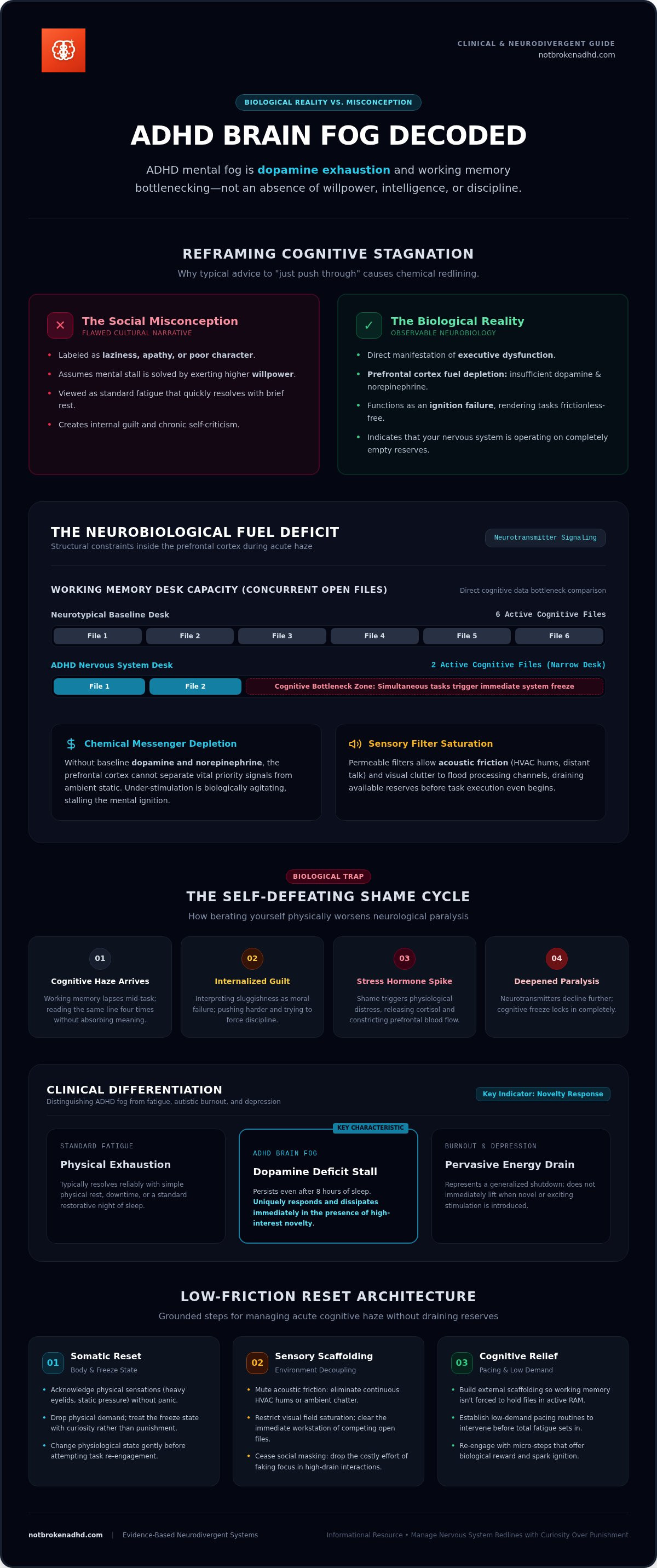
Society often equates slowed output with poor discipline or moral failure. When you cannot initiate a basic chore, internalizing that narrative is easy. You tell yourself that you just need to try harder, push through, or practice better self-control. Yet cognitive haze reflects current executive function capacity, not your personal worth.
Berating yourself creates a self-defeating shame cycle. Guilt spikes your stress hormones, which further constricts blood flow and neurotransmitter activity in the prefrontal cortex, locking you deeper into mental paralysis. Successfully managing ADHD brain fog requires trading self-criticism for biological awareness. When you recognize that your nervous system is simply redlining, you can learn how to stop ADHD paralysis by treating the freeze state with curiosity and support instead of punishment.
The Neurobiology: Why ADHD Brains Experience Mental Fog
ADHD brain fog is an observable physiological state rooted in neurotransmitter signaling. Inside the prefrontal cortex, your brain depends on consistent levels of dopamine and norepinephrine to prioritize data, regulate arousal, and sustain focus. When these chemical messengers run thin, communication between neural networks stutters. Learning evidence-based approaches for managing ADHD symptoms highlights that mental haziness stems from a fuel deficit, not an intentional retreat from effort.
Working memory capacity in an ADHD nervous system is naturally restricted. Think of it as a narrow desk. While a neurotypical desk might easily hold six open files at once, yours comfortably holds two. When new tasks, conversational details, or visual interruptions land simultaneously, they cause an acute cognitive bottleneck. The system overloads, forcing processing to slow down dramatically to prevent complete failure. Exploring our comprehensive neurodivergent executive functioning guide can give you a deeper look into how these structural limits influence day-to-day performance.
Dopamine Depletion and the Prefrontal Cortex
Without sufficient baseline dopamine, the prefrontal cortex cannot readily filter important signals from ambient background noise. Low dopamine levels mimic the physical sensations of severe sleep deprivation, even if you clocked eight hours of rest. Under-stimulation is not just boring; it feels physically agitating and cognitively heavy. When an unstimulating task provides zero biochemical reward, your internal ignition stalls, plunging your thoughts straight into dense fog.
Sensory Overload and Cognitive Saturation
Your nervous system constantly works overtime because its sensory filters are naturally permeable. Environmental triggers continuously drain your processing energy:
- Acoustic friction: Humming HVAC units, distant conversations, or sudden mechanical thuds.
- Visual static: Flickering fluorescent tubes, intense glare, and cluttered surfaces.
- Physical irritation: Scratchy clothing seams, restrictive waistbands, or fluctuating room temperatures.
Navigating these layered sensory inputs forces your brain into cognitive saturation. The mental haze you experience functions as an emergency shutoff valve, shielding your nervous system against sustained sensory overload.
The Chronic Sleep-Wake Rhythm Disruption
Biological sleep disruptions compound this neurochemical vulnerability. Many neurodivergent adults navigate delayed sleep phase patterns, pushing natural circadian rhythms late into the night. When evening hyperfocus kicks in, you trade crucial regenerative rest for brief periods of uninterrupted clarity. The resulting sleep debt blocks deep restorative cycles, leaving you with thick morning haze and making managing ADHD brain fog a daily necessity.
If you want a clearer, low-demand way to evaluate how these neurological factors shape your daily energy, exploring self-guided tools through The ADHD Field Guide offers validation without clinical red tape.
ADHD Brain Fog vs. Burnout, Fatigue, and Depression
Untangling mental haze is tricky because multiple internal states present identical symptoms on the surface: slowed processing, poor concentration, and low motivation. Yet treating an ADHD-related attention freeze the same way you treat clinical exhaustion will only prolong the struggle. Successfully managing ADHD brain fog requires identifying the biological driver behind your sluggishness so you can apply the right support.
Consider how these states differ in origin and behavior:
- ADHD Brain Fog: Driven by temporary dopamine exhaustion and prefrontal under-arousal. Highly situational, shifting rapidly based on context, novelty, or urgency.
- Autistic Burnout: Triggered by prolonged sensory overload, masking, and executive stress over months. Manifests as a deep loss of functional skills and communication capacity.
- Major Depression: Rooted in pervasive neurochemical and mood dysregulation. Causes persistent anhedonia that blankets every life domain equally.
If your mental haze comes paired with pervasive hopelessness, profound emotional numbness, or an inability to care for yourself that lasts for weeks, clinical support is essential. Resources from the National Institute of Mental Health show that while adult ADHD frequently co-occurs with mood disorders, severe persistent mood flattening requires comprehensive evaluation from qualified healthcare providers.
Identifying the Interest-Based Nervous System
The clearest hallmark of ADHD brain fog is situational responsiveness. You might spend two hours paralyzed at your desk, unable to parse an invoice. Yet if a sudden emergency emerges, or an intriguing research rabbit hole catches your attention, the fog vanishes instantly. Your brain lights up with crisp, rapid focus. Major depression doesn't operate this way; it dampens interest across the board, making even your favorite hobbies feel hollow and unreachable.
Recognizing Executive Dysfunction Burnout
Acute afternoon haze is temporary. It clears with biological care, sensory breaks, or a boost in interest. Executive dysfunction burnout, by contrast, happens when you spend weeks forcing your system through cognitive exhaustion with sheer willpower and panic.
Pushing harder when your brain has stalled backfires. When simple words stop registering and basic physical coordination feels clumsy, your nervous system is signaling that its processing threshold has been breached. Respecting that red line prevents acute fog from degenerating into months of incapacitating shutdown.
The Daily ADHD Brain Fog Reset Checklist
When mental static takes over, you cannot rely on complex executive planning to pull yourself out. High-demand routines collapse under cognitive haze. Successfully managing ADHD brain fog requires a rapid, low-friction sequence that attends to basic biological needs before asking your prefrontal cortex to process abstract tasks. Work through these three progressive steps sequentially.
Immediate Somatic and Biological Resets
Restore physiological baseline functions first. Your brain cannot generate sufficient focus signaling while running on dehydration or low blood glucose. Target these quick physical adjustments:
- Hydrate and fuel: Drink 12 ounces of cold water immediately, followed by 10 to 15 grams of easily digestible protein (such as a hardboiled egg, protein shake, or a handful of almonds) to stabilize blood sugar.
- Trigger the dive reflex: Splash cold water directly onto your eyes and cheekbones for 15 seconds. This stimulates the vagus nerve, rapidly lowering sympathetic nervous system arousal.
- Bilateral movement: Take a two-minute brisk walk down the hallway or march in place. Alternating physical movements engage both hemispheres of the brain to wake up circulation.
- Circadian signaling: Step outside into direct natural daylight for three minutes, letting ambient light hit your retinas without sunglasses to trigger alertness pathways.
Sensory Environment De-escalation
Clear out environmental friction within three minutes. Turn off the competing sensory inputs that silently drain your processing bandwidth. Put on active noise-canceling headphones or queue up a low-frequency brown noise stream to soften acoustic spikes. Switch off harsh fluorescent overhead fixtures in favor of warm, low-wattage desk lamps. Minimize visual chaos by closing non-essential browser windows or turning your physical workspace toward a bare wall.
Cognitive Micro-Steps for Task Re-entry
Re-entering work after a freeze requires shrinking initial start friction down to almost nothing. Empty your overloaded working memory by scribbling lingering thoughts onto a blank sheet of physical scrap paper, clearing mental cache files without judging them. Then, pick a tiny, five-minute entry step that requires zero complex decisions, like opening a document or writing a single sentence. Give yourself radical permission to complete this initial step poorly. Bypassing perfectionism gets the wheels turning again.
For more structure, try layering in these practical ADHD productivity hacks that align with neurodivergent dopamine patterns. When you need extra structure to navigate sudden haze, you can explore downloadable ADHD guides that support working memory without draining your energy.
Long-Term Systems to Protect Your Mental Energy
Quick somatic resets help clear acute mental haze, but sustainable cognitive clarity requires structural changes. Managing ADHD brain fog over the long haul means creating external support systems that protect your working memory before exhaustion hits. When your environment holds your routine for you, your brain expends far less executive energy just trying to stay oriented.
Externalizing Working Memory and Scaffolding
Holding multiple logistical details in your head accelerates cognitive fatigue. Offload that burden by embedding visual prompts into physical space:
- Designate launch pads: Keep essential everyday items like your wallet, keys, glasses, and daily medications in a single, high-contrast tray near your exit door.
- Rely on analog checklists: Multi-layered productivity apps often demand heavy executive function just to navigate. Simple, single-column dry-erase boards or sticky notes placed directly at eye level reduce digital friction.
- Automate daily micro-decisions: Standardize repetitive tasks like weekday morning breakfasts or work outfits. Eliminating low-value decisions early preserves precious dopamine for complex tasks later.
Pacing Dopamine Through Timeboxing
Hyperfocus feels like a superpower until the crash leaves you depleted for days. Pacing your energy protects your chemical reserves. Working in brief fifteen- or twenty-minute intervals using a specialized Pomodoro timer for ADHD focus prevents your brain from running until it overheats.
Pair these intervals with mandatory, non-screen micro-breaks. Step away from your desk, stretch, or look out a window for three minutes rather than scrolling social media. Checking off small, incremental work sprints also supplies consistent dopamine micro-bursts, keeping mental fog from settling in during long afternoons.
Next Steps: Tools for Ongoing Clarity
Long-term resilience begins with identifying your personal cognitive patterns. Keep a lightweight log for one week, noting the time of day, sensory conditions, and prior tasks whenever mental haze sets in. Recognizing whether your fog triggers are acoustic, metabolic, or emotional allows you to install precise defenses ahead of time.
Remember that living with a neurodivergent mind does not mean your brain is defective; it simply requires intentional, low-demand tools built for your neurotype. To explore educational materials, low-friction scaffolding, and interactive self-check tools designed to support your working memory, visit The ADHD Field Guide today.
Reclaiming Clarity on Your Own Terms
Living with a neurodivergent nervous system means recognizing that mental haze isn't a character defect. It's a physiological cue that your working memory and dopamine stores are running thin. Successfully managing ADHD brain fog isn't about white-knuckling through cognitive exhaustion; it's about honoring your biology, stripping away sensory overload, and meeting your needs with low-friction somatic resets.
By pairing immediate physical resets with steady environmental scaffolding, you protect your scarce mental energy before shutdown hits. You don't need more willpower. Give yourself permission to pause, adjust your space, and move at a pace your nervous system can handle. You simply need supportive structures that work alongside your natural wiring instead of fighting against it.
When you're ready to cultivate steady, guilt-free clarity, explore our ADHD educational resources and tools. With accessible symptom self-checks, downloadable guides, and neurodivergent focus tools, you can navigate your day with confidence, dignity, and calm.
Frequently Asked Questions
Can ADHD brain fog occur even if I get eight hours of sleep?
Yes, absolutely. ADHD brain fog isn't just about sleep volume; it's deeply tied to dopamine regulation in the prefrontal cortex. Even after eight full hours of physical rest, an under-stimulated neurodivergent brain can struggle to produce the baseline neurochemicals required for mental alertness. Irregular sleep architecture or disruptions in deep, restorative sleep cycles can also leave you waking up chemically unrefreshed, regardless of the clock.
How quickly can I clear ADHD brain fog during an important workday?
You can often disrupt acute fog within five to ten minutes by using targeted somatic resets. Splashing cold water on your face, stepping into bright daylight, and drinking cold water trigger rapid autonomic shifts that wake up your nervous system. Pair these physical steps with a five-minute micro-task to restore momentum. Effective strategies for managing ADHD brain fog focus on physical regulation first, rather than forcing mental concentration.
Is brain fog an official diagnostic symptom of adult ADHD?
No, brain fog is not an official clinical diagnostic term listed in the DSM-5-TR. However, clinicians and researchers widely recognize it as an everyday description of executive dysfunction, sluggish cognitive tempo, and working memory saturation. While official diagnostic criteria focus on inattention and hyperactivity, the subjective experience of mental cloudiness is one of the most common real-world complaints reported by neurodivergent adults.
What is the difference between ADHD brain fog and dissociation?
ADHD brain fog is primarily an attentional bottleneck caused by low dopamine and executive fatigue, leaving you feeling sluggish, distracted, and mentally blocked. Dissociation, by contrast, is a psychological defense mechanism often tied to trauma or extreme nervous system stress. Dissociation makes you feel detached from your body, environment, or sense of reality, creating a feeling of floating or viewing yourself from the outside rather than simply having cloudy thoughts.
Why does eating protein or drinking cold water help with mental haze?
Mild dehydration directly impairs attention, short-term memory, and processing speed, making a cold glass of water an immediate circulatory wake-up call. Protein provides essential amino acids, including tyrosine, which your brain uses as raw fuel to synthesize dopamine and norepinephrine. Eating a quick protein snack also prevents rapid glucose fluctuations, giving your prefrontal cortex steady, reliable metabolic energy to power through demanding tasks.
Do ADHD stimulant medications cause or cure brain fog?
Stimulant medications often reduce brain fog by optimizing dopamine and norepinephrine signaling in the prefrontal cortex. However, they can also trigger mental haze under certain conditions. If a dose is too high, it can cause emotional flattening and cognitive bluntness; if it wears off abruptly, an afternoon rebound crash can intensify existing fog. When managing ADHD brain fog alongside medication, tracking your daily response helps you identify dosing patterns with your prescriber.
What should I do if my brain fog lasts several weeks without lifting?
Persistent brain fog that resists basic resets and lasts several weeks warrants a comprehensive evaluation by a healthcare provider. Chronic, unyielding haze can indicate underlying medical issues such as thyroid dysfunction, nutritional deficiencies, sleep apnea, or co-occurring clinical depression. While fluctuating mental fog is normal for ADHD, enduring exhaustion means your nervous system is asking for thorough investigation beyond daily productivity adjustments.


