

What if your home didn’t need stricter rules, just systems that are easier to see and use? When keys vanish, clutter piles up, or putting things away takes more steps than you have energy for, it can feel like you’re the problem. You’re not. A flexible adhd home organization checklist can help make everyday items easier to find without asking you to maintain a perfect routine.
ADHD-friendly organization works best when it fits real life, including interruptions, low-energy days, and the occasional reset. Keep frequently used items visible, give belongings simple, logical homes, and choose storage that’s easy to use. Small changes can make it easier to start and easier to pick up again when a routine slips.
This checklist offers practical ideas for entryways, kitchens, bedrooms, and other everyday spaces, along with ways to keep organizing manageable. Start with one small area, adapt what doesn’t work, and leave perfection out of it. The goal is a home that supports you, not another system you have to work hard to maintain.
Key Takeaways
- Build around the moments that cause friction, not an ideal of a perfectly tidy home.
- Compare storage and reminder options by visibility, setup effort, upkeep, and how well they fit your routines.
- Use the adhd home organization checklist as a set of optional prompts, starting with one small, specific challenge.
- Test a simple system before adding more steps, then adjust it when your household or schedule changes.
- Use a quick review to check whether items are easy to find, easy to put away, and still useful where they are.
ADHD Home Organization: Start with the Friction, Not the Mess
Misplaced keys can turn an ordinary morning into a scramble. Laundry may make it to the washer but not the dryer. A carefully planned organizing system can also become one more thing to maintain. That isn’t proof you’re lazy or incapable. It may mean the setup asks for more remembering, planning, or task-starting than feels manageable in that moment. Executive dysfunction in ADHD can help explain why parts of everyday tasks may feel difficult.
An ADHD-friendly home system is visible enough to remind you what’s there, simple enough to use without extra steps, and forgiving when routines change. It doesn’t have to look a certain way or work perfectly every day. Treat the ideas in this adhd home organization checklist as experiments: keep what makes a task easier and change what doesn’t fit your space or habits.
Fewer steps and visible cues can make a home system easier to start, use, and return to after an interruption.
Notice which home tasks create the most friction
Before moving things around, notice where tasks get stuck. Maybe keys disappear between the door and your next appointment, or clean laundry stays in a basket because putting it away involves too many decisions. Describe the snag, not yourself. Ask where the task breaks down: remembering it, starting it, finding supplies, or finishing it. Your answer points to what the system needs to support.
Choose one small area before organizing the whole home
Pick a high-use spot connected to a routine, such as the entryway you pass on your way out, a kitchen counter where you prepare meals, or the bedside area where you charge your phone. The most cluttered room doesn’t have to be the best starting point. Choose one category, such as keys, mail, or charging cables, and make those items easier to find. A small, useful change is enough for now.
Keep the first attempt modest. You might set up one visible landing spot for keys near the door or clear just the part of the counter you use to make breakfast. You’re not committing to reorganizing the whole home. You’re testing whether a change reduces friction in a routine you repeat.
If the new setup feels awkward, that’s useful information, not a failed effort. Perhaps the storage spot is too far from where you use the item, or putting it away takes too many actions. Adjust the system to match what actually happens in your home. The aim is support, not a picture-perfect space.
Build ADHD-Friendly Home Systems Around Visibility and Easy Access
A useful storage spot fits the way you already move through your home. Keep frequently used items close to the task they support: cooking tools near where you prepare food, and your wallet or keys near the point where you leave. If gathering supplies makes a task hard to start, store the items together. A small container or shelf you already own may be enough.
Consider how easy it is to see, reach, and put away each item. Open shelves and clear containers make contents visible, while closed cupboards can reduce visual distraction or work better in shared spaces. Neither option is automatically right for everyone. Choose based on what you need to notice and what feels comfortable in your home.
Give everyday items a clear, convenient home
Choose one consistent landing place for belongings that often go missing, such as a bowl or tray near the door. Keep it close to the route you naturally take, rather than tucked away where you have to remember to look. For a recurring task, group only the supplies you actually use. Choose a container with enough room to put things back without careful rearranging.
Simple categories can also reduce the decisions involved in putting items away. For example, one spot for everyday charging cables may be easier to maintain than separate categories for every device. If you find yourself sorting and resorting more than using the system, simplify it.
Make storage and visual reminders easier to use
Try a short label when it helps you locate or return something, such as “batteries” or “mail.” Broad categories are often easier to maintain than detailed rules. Consider physical effort, too: a container that’s hard to open or stacked behind other things can add friction, even if it looks tidy.
A visible cue can act as an environmental reminder, bringing an item or next step to your attention without relying on memory alone. Put a note near the action it prompts, such as a reminder by the laundry supplies, rather than somewhere you’ll rarely see it. If cues blend into the background, remove or move them. More reminders aren’t always more helpful.
Use the adhd home organization checklist to think through visibility, access, and upkeep before choosing a setup. Then test one adjustment in the space where it matters. Keep it if it helps, and change it if it creates extra work. For more practical ADHD and executive-function education, explore downloadable ADHD guides from The ADHD Field Guide.
Compare ADHD Home Organization Options by Effort, Visibility, and Flexibility
A system can look orderly and still be hard to use. The useful question is whether it helps you notice what you need, act with fewer barriers, and reset without a complicated routine. The options below aren’t rankings. Your space, preferences, and daily habits matter more than following one “right” method.
Open storage or closed storage: which makes items easier to find?
Open storage can make belongings easier to scan, but seeing everything may feel distracting. Closed storage can soften visual clutter, though its contents may be easier to forget. A mix can work well: keep frequently used items visible and put occasional-use belongings behind a door. Choose based on what you need to find and what helps the room feel comfortable.
Reminders, labels, and drop zones: choose the lightest system
A cue near the task may prompt action, a short label can make a category easier to find, and a designated drop zone can catch items as you come through the door. Check whether each option is noticeable at the right moment and simple to reset. If it adds more steps than it saves, revise or remove it.
| Option | Visibility | Setup effort | Upkeep | Situations it may suit |
|---|---|---|---|---|
| Open storage | High | Low if you use existing shelves or containers | Items stay in view; surfaces may look busy | Frequently used supplies you want to spot quickly |
| Closed storage | Low | Low to moderate, depending on categories | Less visual exposure; contents may need labels | Items that are distracting or used less often |
| Written reminder or label | Depends on placement | Low | May need moving or updating as routines change | A specific next step or broad storage category |
| Visual cue | High when placed near the action | Low | Remove or refresh cues that fade into the background | A routine you tend to overlook at a particular spot |
| Fixed drop zone | High if it’s easy to see | Low | Needs occasional clearing | Items like keys or a wallet with one predictable landing place |
| Flexible drop zone | Varies by location | Low | May need a quick reset when items spread | Shared spaces or routines that shift from day to day |
Use the adhd home organization checklist to compare options by effort, visibility, and flexibility, then test just one change. During an ordinary week, notice whether the item is easier to find and whether putting it away feels manageable. If the system doesn’t fit, treat that as useful feedback. Adjust it to match your habits, not an idealized picture of an orderly home.
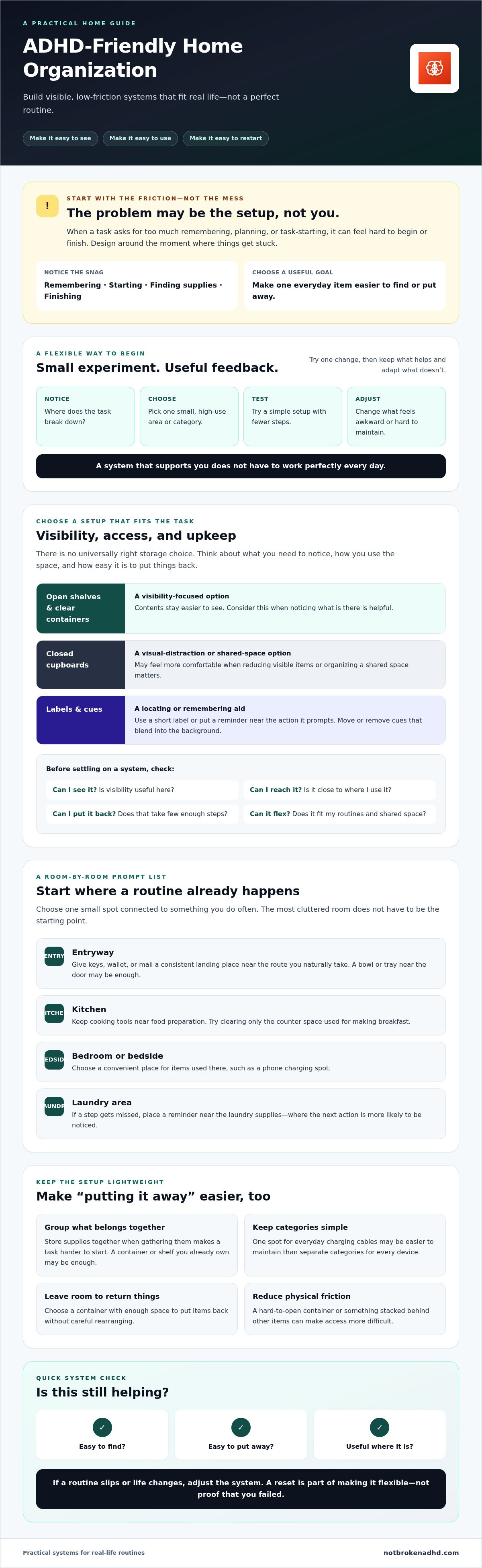
Use This ADHD Home Organization Checklist One Small Step at a Time
This adhd home organization checklist is a set of prompts, not a test you need to finish. Skip anything that doesn’t fit your home. The aim is to make one repeated task feel easier, not to create a new project or overhaul every room.
A flexible checklist for setting up one home system
Choose one snag and work through these steps in order. For example, if you can’t find the supplies you need to water plants, focus on that routine rather than reorganizing an entire closet.
- Name the friction point: What keeps going wrong, and where does it happen?
- Define the task: What are you trying to remember, find, start, or finish?
- Choose a simple setup: Give the item or supplies a convenient home near where you use them. Pick a spot you can notice and reach.
- Remove extra steps: Keep the system easy to use. Avoid adding sorting rules or storage steps that don’t solve the original problem.
- Test it in real life: Try the setup during the routine it’s meant to support. Notice what helps, then adjust one part instead of starting over.
A system may need testing before it fits. If the supplies end up elsewhere, consider whether the chosen spot is inconvenient or hard to see. That’s feedback you can use, not a reason to blame yourself.
A low-pressure reset for when the system slips
A reset doesn’t have to mean restoring the whole home. Pick one useful area, such as the spot you need for tomorrow morning, and bring it back to a workable state. On a busy or low-energy day, ask:
- What can wait until another time?
- What needs a clear home right now?
- Would another person’s help make this task more manageable?
If a short timer helps you begin, use one as a gentle boundary, not a demand to finish everything. The ADHD Field Guide’s Pomodoro timer is one option; you can also use any timer that suits you, or skip timing altogether. The useful part is choosing a small enough reset that feels possible today.
For more practical education about executive functioning, explore executive-function strategies from The ADHD Field Guide. Take what fits, leave what doesn’t, and let your home system change as your needs do.
Keep Your ADHD Home Organization System Useful as Life Changes
A setup that worked last season may stop fitting when schedules shift, household members change, or storage needs grow. That doesn’t mean the system failed. It means the conditions around it changed. Rather than reviewing every task in your home, check one system you’ve been using and ask: Is this item easy to find, easy to put away, and still useful here?
Review what works without turning organization into another demand
Keep the review brief. Notice what feels easier, what still causes a snag, and what single adjustment might help. If a basket keeps collecting items that don’t belong in it, perhaps the spot is useful but the category needs to change. If you’ve stopped using a system, treat that as information about its fit, not evidence of a personal failing. Adapt one part rather than starting over.
Shared spaces may also need shared agreements. Ask a household member where commonly used items should go, then agree on a location everyone can remember and reach. A simple shared setup can make it less likely that one person has to put things away or explain where they belong.
Find additional ADHD-focused support and practical resources
As you revisit your adhd home organization checklist, keep the goal small: make a frequently used system work a little better for the people who rely on it. Downloadable ADHD and executive-function guides offer educational information you can explore at your own pace. They’re educational resources, not personalized clinical care, so choose only what feels relevant.
Your next step can be modest: try one checklist prompt in a spot that matters, or explore ADHD guides and tools from The ADHD Field Guide. No full-home reset required. A useful system is one that can change with you.
Make One Small Change That Fits Your Life
A supportive home system doesn’t need to look perfect. It needs to help you find what you use, make everyday tasks easier to begin, and remain simple enough to adjust when routines change. Use the adhd home organization checklist as a starting point, not a set of rules. Choose one recurring snag, test a small change, and keep only what genuinely suits your space and habits.
If you’d like more ideas to explore, The ADHD Field Guide offers downloadable ADHD and executive-function educational guides, ADHD-specific interactive simulations, and a built-in Pomodoro timer that you can use optionally during a short organizing session. Explore practical ADHD guides and tools for additional educational resources.
Start where it feels manageable. A single useful change counts, and you can build from there at your own pace.
Frequently Asked Questions
How do I organize my home if I have ADHD?
Start with one recurring task that causes frustration, then make that task easier to do. Identify where it gets stuck, such as remembering supplies or putting something away, and try a simple adjustment close to where the task happens. Favor systems that are easy to see, access, and reset. You don’t need to organize every room at once, and a setup can change as you learn what works for you.
What is the easiest room to organize first with ADHD?
There isn’t one easiest room for everyone. Start with a small, high-use area tied to a frequent routine, such as the entryway, a kitchen work surface, or a bedside table. Choose the spot where a simple change could remove a repeated snag, rather than tackling the room that looks messiest. You might begin by giving one group of everyday items a clear, convenient place.
Are open shelves or closed storage better for ADHD?
Neither is automatically better; it depends on what helps you notice and use your belongings. Open shelves can make items easier to spot, but visible objects may feel distracting. Closed storage can make a room feel less visually busy, but you may be less likely to remember what’s inside. Try a mix: keep frequently used items visible and store occasional-use items out of sight if that suits you.
How can I stop losing everyday items at home?
Choose one consistent, easy-to-reach landing place for items you often misplace, such as keys, a wallet, or glasses. Put it near the spot where you naturally arrive or get ready to leave, and use it consistently when you can. A visible bowl, tray, or open container may be enough. If the spot is inconvenient or easy to overlook, move it rather than adding complicated rules.
What should an ADHD home organization checklist include?
An adhd home organization checklist should help you solve one practical problem at a time. Include prompts to identify a recurring snag, name where it happens, choose an easy-to-use home for the item or supplies, and test the setup during the routine it supports. Add a reminder to adjust one part if the system creates extra steps. Skip prompts that don’t suit your home or needs.
How do I keep my home organized when routines change?
Review a system when your schedule, household, or storage needs shift. Ask whether the item is still easy to find, easy to put away, and useful where it lives. If not, try one small adjustment, such as moving a drop zone closer to a new route through the home. A system that needs to change isn’t a failure; it’s information about what fits your life now.
Can a timer help me start an organizing task?
A timer may help if a defined work period makes starting feel more manageable, but it’s optional. Pick one small task, such as clearing a single surface, and set a time limit that feels comfortable. Stop when the timer ends if you need to. The ADHD Field Guide includes a Pomodoro timer as one possible tool, but any timer that suits you, or no timer at all, is fine.


