

What if your cleaning checklist didn’t ask you to finish the whole room? When “clean the kitchen” contains a dozen hidden decisions, choosing where to start can feel like a task of its own. An adhd cleaning checklist works better as a flexible menu than a test you pass or fail. Difficulty starting, sequencing, or sticking with chores isn’t a character flaw. ADHD-related executive-function challenges can make large, unstructured tasks harder to begin.
This guide helps you choose one doable task without planning your entire home first. You’ll find small, room-by-room options to match your attention, energy, and priorities, whether you have a few minutes or more capacity today. Use the checklist as a place to choose from, not a standard you have to complete.
We’ll break cleaning into clear actions for shared spaces, the kitchen, bathroom, bedroom, and more, with ideas for adjusting tasks to your energy and sensory needs. An unfinished list isn’t a failure. It’s information you can use to decide what comes next, and one small reset is still progress.
Key Takeaways
- Turn “clean the kitchen” into clear, visible actions that are easier to start and finish.
- Use the adhd cleaning checklist as a flexible menu, choosing room-by-room tasks that fit your priorities.
- Match tasks to your time, energy, and sensory needs instead of expecting the same routine every day.
- Restart with one small step after a missed day; you don’t need to catch up on everything first.
- Build your checklist around what matters in your home, with quick-reset and optional tasks for each room.
Why an ADHD Cleaning Checklist Can Feel Hard to Start
A room can look like one problem while presenting your attention with several at once: dishes on the counter, laundry waiting by the door, and clutter covering a chair. Each item suggests a different next step. Choosing which one matters most, remembering what you meant to do, and getting started can feel like a project before any cleaning begins.
These challenges can involve executive function, the mental skills used to plan, organize, remember steps, and begin actions. For some people with ADHD, moving from noticing a mess to choosing and starting a task takes real effort. Others may find cleaning manageable but struggle with a different part of the routine. ADHD experiences vary, so there’s no single explanation or checklist that fits everyone.
Why can a small cleaning task feel like a whole-room project?
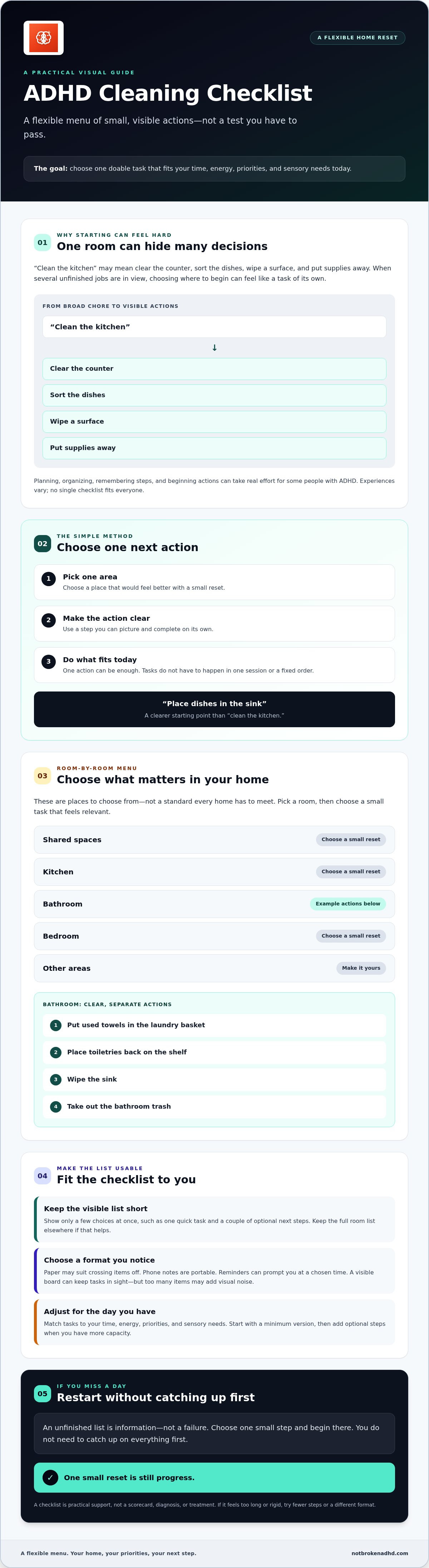
“Clean the kitchen” sounds like one instruction, but it may hide a string of decisions: clear the counter, sort the dishes, wipe a surface, and put supplies away. If you also see laundry and clutter, your attention may keep jumping between unfinished jobs. That can make it harder to settle on a first step. The term executive dysfunction describes difficulties with skills such as planning and task initiation, which can affect multi-step activities.
What a flexible cleaning checklist can, and cannot, do
An adhd cleaning checklist is an external prompt system, not a scorecard for your character or worth. It can hold steps outside your memory and reduce the number of choices you need to make in the moment. “Place dishes in the sink” gives you a clearer starting point than “clean the kitchen.” A specific cue can make the task easier to see and begin.
A checklist can’t create more time, energy, or attention than you have, and it can’t guarantee a consistently tidy home. It’s practical support, not a diagnosis or treatment. If a list feels too long, too rigid, or difficult to use, that doesn’t mean you’ve failed. It may simply need fewer steps or a different format. Start with one action that feels possible. The goal is support, not perfection.
How to Build an ADHD Cleaning Checklist That Is Easy to Use
A useful checklist starts with your home as it is, not with an ideal routine borrowed from someone else. Choose one area that would feel better with a small reset, then list actions you can see and complete. Organization can be challenging for some people with ADHD, as described in the National Institute of Mental Health’s overview of Attention-Deficit/Hyperactivity Disorder. A checklist can make the next action easier to find without expecting you to do everything at once.
Smaller actions reduce planning friction by turning a broad chore into a next step you can picture and begin.
Turn vague chores into visible next actions
Take a broad task such as “clean the bathroom” and break it into separate actions. Each one should be clear enough to imagine and mark complete on its own.
- Put used towels in the laundry basket.
- Place toiletries back on the shelf.
- Wipe the sink.
- Take out the bathroom trash.
Choose a minimum version first, such as putting toiletries away. Then add optional next steps for when you have more capacity. The tasks don’t have to happen in one session or in a fixed order. If wiping the sink is the only action that fits today, the checklist has still helped you make a choice.
Choose a checklist format that fits your attention
The best format is the one you can notice and use. A paper list may work well if you like crossing items off. Phone notes are portable, while reminders can prompt you at a chosen time. A visible board may help keep tasks in sight, but too many items can add visual noise. Try one format, then adjust if you keep forgetting to check it or find it distracting.
Keep the visible list short. Show only a few choices at once, such as one quick task and a couple of optional next steps. You can keep the full room list elsewhere and bring forward only what feels relevant today. For broader ideas about adapting strategies to your needs, explore this executive functioning guide.
Build, test, and revise your list. If you want more practical context on ADHD and executive function, The ADHD Field Guide’s educational resources can offer another place to explore strategies.
Room-by-Room ADHD Cleaning Checklist: Choose the Tasks That Matter
Use these room-by-room options as a menu, not a standard every home has to meet. Pick one task that would make the space easier or safer to use, then stop, switch rooms, or continue if it suits your capacity. This adhd cleaning checklist is meant to help you choose, not assign every task to every cleaning session.
Kitchen and bathroom: start with practical resets
In the kitchen, focus on a usable surface or a practical hygiene task. You might gather dishes, clear one section of counter, or wipe the spot you use most. A quick reset could be just gathering the dishes. If you have more capacity, put away a few clean items or wipe another surface.
For the bathroom, a small reset might mean collecting laundry or wiping one visible area, such as the sink. Optional next steps could include replacing the hand towel or taking out the trash. Choose what matters in your household today. You don’t need to complete every option, or even clean both rooms in one session.
Bedroom and living areas: make the space easier to use
In the bedroom, try putting laundry in one place, clearing a path beside the bed, or moving items off the surface you need. The quick reset might be gathering clothes into a basket. If you have more energy, put away a few clean items or clear another small surface.
In a shared living area, return a few objects to their usual homes or clear one seat so it’s ready to use. You could stop there. An optional next step might be gathering cups or putting away items from one table. Keep the aim practical: a clear path, a usable seat, or a surface you need. A room doesn’t have to look a certain way to count as cared for.
Choose the room that’s affecting your day most, then adjust as you go. If a task feels uncomfortable or more demanding than expected, switch to a smaller one or pause. For broader ADHD information and resources, Children and Adults with Attention-Deficit/Hyperactivity Disorder (CHADD) is one place to explore. For help with planning and choosing what to do next, see this ADHD task-management guide.
How to Adapt Your Cleaning Checklist for Time, Energy, and Sensory Needs
Your capacity can shift from one day to the next, so let the checklist shift with it. An adhd cleaning checklist doesn’t only work when every box is checked. Choose tasks based on the time, energy, and comfort you have right now, not what you hoped you’d have.
- Low energy: Put a few items in their usual places, gather laundry, or clear one small surface.
- Short window: Collect dishes from one room, wipe a frequently used counter, or clear a path.
- More capacity: Choose a couple of related tasks, such as gathering bathroom laundry and wiping the sink.
An unfinished list can still support useful progress, because one completed task may make your space easier to use. You can change your choice tomorrow without undoing what you did today.
What can I clean in five or ten minutes?
Before starting a timer, choose one visible task. You might put the dishes beside the sink, clear one section of a table, or gather clothes from the floor. These are small tasks, not promises to finish a room. If you have more time or focus once you begin, decide whether to continue.
A timer can provide a clear start and stop point if that feels helpful. The ADHD Field Guide’s Pomodoro timer is one optional focus aid, not a required cleaning method. You can also work without a timer, pause early, or stop when the time is up.
Make cleaning more comfortable for your senses
Notice what’s making a task harder. Is the vacuum noise grating? Is the lighting uncomfortable, a cleaning product’s smell unpleasant, or a texture difficult to handle? You don’t have to push through every sensation to make progress. Try a quieter task, adjust the environment if you can, or pause and return later.
If one cleaning task feels overwhelming, switching to another that’s more comfortable is a valid adjustment. You could gather laundry instead of vacuuming, or clear a surface without using a scented product. For more ideas, explore this ADHD sensory overload strategies guide.
Choose the option that fits today, then let that be enough. For more ADHD-focused tools to support attention and task management, explore resources from The ADHD Field Guide.
How to Restart Your ADHD Cleaning Checklist Without Shame
Stopped using your list for a while? You don’t need to work out what you missed or make up for every skipped day. The checklist is a support tool, not a schedule you’ve broken. Begin with what’s happening in your home now, and choose one task that would help today.
Try this simple restart: notice, choose, make smaller, begin.
- Notice: Look around and name one thing you’d like to make easier.
- Choose: Pick a task that fits your current capacity.
- Make it smaller: Turn “sort the bedroom” into “put clothes in one pile.”
- Begin: Do that first step, then decide whether to stop or continue.
No catch-up session required. A missed day doesn’t add extra tasks to today’s list.
What if I stopped using my checklist?
Return to the present, not the days you weren’t using it. If the list itself is hard to restart, look for the point of friction. Maybe “tidy the living room” is too vague, or a task takes more energy than you usually have. Remove it, shrink it, or rewrite it as a visible action, such as “clear one seat.”
That’s not correcting a personal failure. It’s adjusting a support tool so it fits your needs better. Your adhd cleaning checklist can change as your routines, energy, or home change. Keep the steps that help; let go of the ones that make starting harder.
Find more ADHD-friendly support when you need it
Learning about executive-function challenges may help you find practical ways to approach planning and task initiation. Educational resources can offer ideas to explore, but they don’t diagnose ADHD or replace individualized professional support. The cleaning steps in this guide can still stand on their own. Use what’s useful, skip what isn’t, and return whenever you need a fresh starting point.
If you’d like to explore more ADHD educational tools, visit ADHD educational tools for optional further resources.
Make Your Next Cleaning Step Work for You
A helpful adhd cleaning checklist is a flexible prompt, not a demand to finish every room. Break broad chores into visible actions, choose tasks that fit your energy and sensory needs, and let one completed step count. If you miss a day, return to what would help now rather than trying to catch up.
Your home doesn’t need to match anyone else’s idea of clean. The goal is to make it more usable in ways that work for you. A small reset, a pause, or a change of plan can all be part of finding an approach you can return to.
If you’d like more practical educational content about ADHD and executive function, explore ADHD educational tools. Optional resources include a Pomodoro timer to structure a cleaning sprint and interactive simulations. Pick what feels useful, leave the rest, and start with one manageable step when you’re ready.
Frequently Asked Questions
Why is cleaning so hard with ADHD?
Cleaning can be hard with ADHD because it often involves planning, choosing a first step, remembering what comes next, and staying with a task. Seeing dishes, laundry, and clutter together can make those decisions feel like competing demands. Sensory factors, such as loud appliances or strong cleaning-product smells, may add another barrier for some people. ADHD experiences vary, and difficulty cleaning isn’t a sign of laziness or a personal failing.
How do I make an ADHD cleaning checklist?
Build an ADHD cleaning checklist around your own home and the tasks that would make it more usable. Start with one room, then change broad chores into actions you can picture, such as “put towels in the hamper” instead of “clean the bathroom.” Choose one minimum task and add optional next steps. Keep only a few choices visible, and adjust the wording or format if the list feels hard to use.
What should be on a daily ADHD cleaning checklist?
There’s no daily list that everyone with ADHD needs to follow. Choose a few small actions that support your household, such as putting dishes in the sink, collecting laundry in one place, or clearing a path you use often. Treat them as options, not daily requirements. You might do one task, choose a different one, or skip the list when it doesn’t fit your time or energy.
How do I start cleaning when I feel overwhelmed?
Start by choosing one visible task, then make it smaller until the first action feels clear. Instead of “sort the bedroom,” try “put clothes in one pile.” You don’t need to plan the whole room or decide what comes next before beginning. If a task feels uncomfortable or too large, switch to a simpler one or pause. A single useful action is a reasonable place to start.
Can a cleaning checklist help with ADHD task paralysis?
A checklist may help reduce some of the decisions involved in starting by giving you a clear prompt to follow. For example, “wipe the sink” is easier to act on than “clean the bathroom” because it names one specific step. A checklist can’t guarantee that starting will feel easy or remove every barrier. Keep it flexible, and try a different format or smaller action if you’re still stuck.
What if I never finish my ADHD cleaning checklist?
An unfinished checklist doesn’t mean you’ve failed. The list is there to support you, not to prove that you can complete every task. Return to what matters today rather than trying to catch up on missed items. If the same task keeps going unfinished, consider removing it, breaking it into smaller actions, or making its wording more specific. Your checklist can change as your needs and capacity change.
How long should I clean for if I have ADHD?
There’s no set cleaning duration that works for everyone with ADHD. You could choose one small task and work until it’s done, or use a short timer as an optional start-and-stop cue. For example, gather a few dishes or clear one section of a counter, then check whether you want to continue. A Pomodoro timer can help structure a cleaning sprint, but you don’t need a timer or a fixed session length.


