

Can changing what you eat actually quiet a noisy mind, or is the conversation around diet and adhd in adults mostly internet hype? If you've ever forgotten to eat until late afternoon and suddenly crashed into intense irritability or brain fog, you already know how deeply food shapes your mental state. You might also feel exhausted by restrictive fads, paralyzing meal prep routines, and the lingering guilt of relying on quick sugary snacks just to kickstart your dopamine.
Here's the grounded reality: diet stabilizes executive fuel; it doesn't replace core neurodivergent support. You don't need an immaculate pantry or rigid recipes that burn out your working memory before dinner even starts. Instead, understanding how daily nutrition interacts with blood sugar and focus can help protect your emotional regulation from exhausting crashes. Below, we'll explore what scientific research actually reveals about adult brain chemistry, dismantle common dietary myths, and share low-friction eating habits designed specifically for real life.
Key Takeaways
- Explore the real science behind diet and adhd in adults, separating evidence-based metabolic support from restrictive internet cure-alls.
- Discover why low dopamine triggers intense sugar cravings and how smoothing out glucose spikes protects emotional stability and task initiation.
- Evaluate the hidden risks of rigid elimination diets and how restrictive eating rules often overload fragile executive function.
- Learn low-friction eating strategies that remove cooking paralysis, honoring the vital rule that fed is always best.
- Understand how steady nutrition works alongside digital tracking and self-awareness tools to create a balanced, shame-free daily routine.
What Is the Connection Between Diet and ADHD in Adults?
Nutritional psychiatry investigates how metabolic fuel and digestive health shape cognitive performance, but it isn't an overnight fix. When evaluating diet and adhd in adults, food functions best as an adjunct layer of daily support. The prefrontal cortex requires continuous, dependable fuel to organize complex tasks, regulate working memory, and sustain impulse control. Metabolic stability supports neurodivergent cognitive regulation by providing an unbroken supply of glucose to fuel energy-hungry prefrontal pathways.
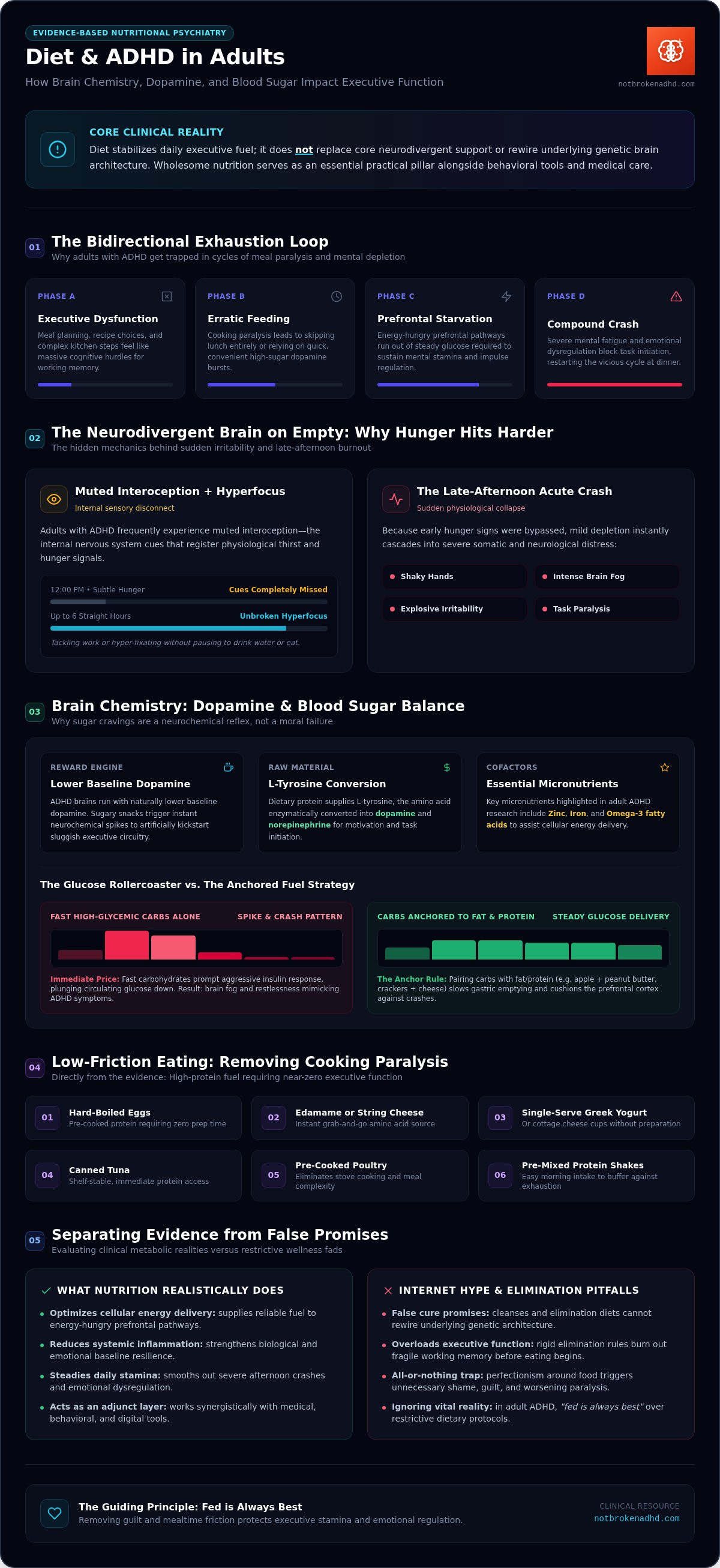
Yet adults face an exhausting bidirectional loop. Executive dysfunction makes meal planning, grocery shopping, and cooking feel like overwhelming cognitive hurdles. In turn, erratic eating deprives the brain of the steady glucose required to initiate those very tasks. You skip lunch because choosing a recipe feels daunting, which then sabotages the mental clarity you need to prepare dinner. This reality explains why comprehensive ADHD management strategies treat dietary stability as one practical pillar alongside medical and behavioral care, rather than a stand-alone solution.
The Neurodivergent Brain on Empty: Why Hunger Hits Harder
Many neurodivergent adults live with muted interoception, the internal sensory system that registers physical cues like thirst or hunger. You might easily miss a mild stomach rumble at noon. Instead, hyperfocus takes over. You tackle spreadsheets, clean a workspace, or research an intense interest for six straight hours without taking a single break.
Then, late afternoon arrives. Mild hunger instantly morphs into an acute physical crash: shaky hands, intense brain fog, and explosive irritability. Because prefrontal resources are completely drained, deciding what to eat in that frantic moment triggers instant task paralysis, leaving emotional dysregulation unchecked.
Separating Complementary Nutrition from False Medical Cures
Online wellness spaces regularly promote restrictive cleanses and elimination protocols claiming to reverse neurodevelopmental differences. These promises are inaccurate and counterproductive. Thoughtful food choices optimize cellular energy delivery, reduce systemic inflammation, and steady daily stamina; they do not rewire the underlying genetic architecture of your brain.
Viewing diet and adhd in adults through a compassionate, evidence-based lens means abandoning all-or-nothing cure narratives. Wholesome nutrition strengthens your baseline resilience. It serves as a reliable support system that works in tandem with professional healthcare, structured routines, and targeted behavioral tools.
How Brain Chemistry, Dopamine, and Blood Sugar Impact Focus
Dopamine directs the brain's internal reward engine, governing motivation, alertness, and task initiation. In the neurodivergent brain, baseline dopamine signaling runs noticeably lower. This deficit creates a constant, unconscious drive for quick chemical stimulation. Sugary, high-carbohydrate snacks offer an instantaneous spike in dopamine. That craving isn't a lack of discipline; it's a neurochemical reflex seeking fuel to jumpstart sluggish executive circuitry. Understanding this mechanism is fundamental when optimizing diet and adhd in adults without shame.
Protein and Dopamine Synthesis: Building the Brain's Messengers
Dietary protein provides the raw amino acid building blocks, specifically L-tyrosine, that the body enzymatically converts into the essential neurotransmitters dopamine and norepinephrine. Without adequate amino acids, neurotransmitter reserves dwindle, leaving task initiation stranded. Adding low-friction protein early in the day cushions your nervous system against mid-afternoon executive exhaustion. Simple options require minimal mental effort:
- Hard-boiled eggs, edamame, or string cheese
- Single-serve Greek yogurt cups or cottage cheese
- Canned tuna, pre-cooked poultry, or pre-mixed protein shakes
The Glucose Rollercoaster: How Sugar Crashes Mimic ADHD Symptoms
Fast carbohydrates create quick dopamine spikes, but they extract a heavy metabolic price. High-glycemic foods cause blood glucose to soar rapidly, prompting an aggressive insulin response that drives circulating sugar straight down. This sudden plummet triggers acute brain fog, physical restlessness, and emotional irritability, directly mimicking and compounding ADHD symptoms. To smooth out the rollercoaster, anchor carbohydrates to fats and proteins. Combining an apple with peanut butter or pairing crackers with cheese slows gastric emptying, keeping glucose delivery steady.
Key Micronutrients Under the Microscope: Zinc, Iron, and Omega-3s
Neurotransmitter synthesis also depends on specific micronutrient cofactors working behind the scenes. Iron enables the primary enzyme responsible for converting tyrosine into dopamine, while zinc and magnesium regulate synaptic transmission and calm neurological over-arousal. Marine omega-3 fatty acids, specifically EPA and DHA, support cell membrane fluidity to optimize neural signaling across attention pathways. Before introducing high-dose mineral supplements, always consult a physician for targeted blood testing to identify real deficiencies. If you want to explore how these biological dynamics shape your daily patterns, exploring executive function educational content can provide structured clarity.
Popular ADHD Diets: What Works, What Fails, and What Harms
Mainstream wellness advice frequently promotes intense restriction as a therapeutic cure. When navigating diet and adhd in adults, extreme regimens almost always collapse under their own cognitive weight. Tracking macros, weighing portions, and auditing ingredient labels demand massive working memory, organization, and sustained vigilance. For a brain already managing an executive deficit, strict dietary rules trigger profound cognitive fatigue, high orthorexic anxiety, and subsequent binge-eating cycles. Sustainable nutritional addition always delivers far greater cognitive stability than restrictive dietary subtraction.
Elimination and Keto Diets: Weighing Evidence Against Executive Cost
Elimination protocols, such as the Feingold diet targeting artificial dyes and preservatives, demonstrate limited therapeutic benefit in adult populations. While a 2011 study in The Lancet revealed significant symptom reduction in 64% of participating children on restricted elimination diets, medical researchers emphasize that this response applies strictly to a small pediatric subset. In adults, the extreme friction of cutting whole food groups rarely justifies the minimal clinical return.
Ketogenic protocols present similar hazards. Drastically restricting carbohydrates requires intense vigilance and planning. The predictable drop-out rate among adults with ADHD is exceptionally high. When slip-ups occur, shame spirals follow quickly, driving reactive binges on rapid dopamine carbohydrates.
The Mediterranean Pattern: A Flexible, Evidence-Backed Framework
Rather than cutting food groups, the Mediterranean approach builds steady metabolic resilience. It prioritizes fiber-dense legumes, olive oil, leafy greens, wild fish, and polyphenol-rich fruits. These components lower systemic inflammation, protect neurovascular circulation, and nourish gut microbiota linked to neurotransmitter signaling.
The real power of this framework lies in flexibility. It functions as an adaptable guideline rather than a punitive checklist. You can simply toss canned chickpeas into bagged salad greens or drizzle extra virgin olive oil over frozen vegetables without tracking a single gram.
Caffeine, Supplements, and Stimulant Medication Interactions
Navigating diet and adhd in adults also requires understanding how daily nutrients interact directly with pharmacotherapy. Many adults lean heavily on high-dose caffeine to bridge executive gaps. Combining multiple energy drinks or strong coffees with prescribed stimulants over-stimulates the sympathetic nervous system, inducing physical jitters, elevated heart rates, and heightened anxiety.
Gastrointestinal pH also controls stimulant uptake. Large doses of ascorbic acid (vitamin C) taken alongside morning amphetamine-based medications acidify the urinary tract and gastrointestinal environment. This accelerates drug excretion and noticeably diminishes therapeutic efficacy. Save citrus juices, grapefruits, and high-dose vitamin C supplements for late afternoon or evening hours to protect your morning medication absorption.
How to Build an Executive-Function-Friendly Eating Routine
Traditional meal prep isn't just about cooking. It is a grueling, multi-step executive obstacle course: auditing the pantry, writing a coherent grocery list, navigating overstimulating supermarket aisles, chopping vegetables, washing pots, and timing side dishes simultaneously. When daily mental bandwidth runs thin, that towering cognitive load triggers instant task paralysis. The foundational philosophy of managing diet and adhd in adults is delightfully simple: fed is always best. Eating cold pre-cooked chicken from the package, dipping crackers into peanut butter, or heating frozen nuggets is an unqualified victory compared to running your brain on empty.
Removing Friction: Assembling Food Without Formal Cooking
Ditch the cutting board entirely. Demanding recipes drain scarce cognitive stamina before dinner ever reaches the stove. Assembling pre-prepped elements bypasses kitchen initiation paralysis. Toss pre-washed salad greens with canned chickpeas, pumpkin seeds, and store-bought vinaigrette. Because ADHD object permanence challenges mean hidden groceries quickly rot in crisper drawers, keep staples visible using clear countertop bins and front-facing fridge shelves. When sensory burnout hits, lean on predictable comfort staples like warm broth or toasted bread without guilt.
Managing Medication-Induced Appetite Suppression
Prescription stimulants frequently mute natural daytime hunger signals, leaving you running on metabolic fumes until a severe rebound crash hits at dusk. Protect yourself by front-loading your daily nutrition. Eat a substantial, protein-dense breakfast right before your morning dose takes effect. If solid food textures trigger sensory aversions at noon, turn to liquid nutrition like chilled smoothies, kefir, or pre-made protein shakes. Once the medication leaves your system in the evening, establish a dedicated refueling window to replenish depleted energy reserves before sleep.
Externalizing Memory: Timers and Frictionless Reminders
During deep task immersion, subtle interoceptive stomach cues fade completely. Hyperfocus blinds you to passing hours, making internal memory unreliable for basic nourishment. Externalizing your eating cues bridges that executive gap. Keep shelf-stable snacks, nuts, and filled water bottles directly inside your field of vision on your desk. You can also anchor nutrition check-ins to structured work cycles; using a visual pomodoro timer prompts consistent hydration and calorie breaks, protecting your cognitive stamina across long afternoons.
Connecting Nutrition to Your Broader ADHD Management Plan
Nourishing your body functions as a foundational baseline rather than an isolated remedy. In the broader landscape of diet and adhd in adults, stable food habits reinforce sleep quality, emotional resilience, and baseline stress tolerance. When erratic meals deplete biological reserves, frustration tolerance plummets and sensory overload escalates quickly. Gaining a holistic view of how your unique neurology shows up across daily routines is essential. Completing an ADHD self-check tool online provides an objective, shame-free starting point for mapping out your broader symptom profile.
Self-compassion matters far more than dietary perfection. Executive functioning fluctuates naturally based on hormonal shifts, workload, and environmental demands. When chaotic days derail your intentions and you end up eating boxed cereal for dinner, treat it with curiosity rather than self-criticism. Every meal presents a clean slate to replenish biological fuel.
Tracking Food and Focus Without Becoming Obsessive
Complex macro-counting apps demand sustained mental overhead, quickly generating perfectionism and inevitable abandonment. Avoid high-maintenance logging systems entirely. Instead, use a lightweight, two-point observation method: record general mental energy on a 1-to-5 scale alongside the rough time you ate.
This minimalist approach helps uncover personal correlations without triggering burnout. You might notice afternoon brain fog reliably follows lunch hours skipped during intense deadlines. Neurodivergent-friendly journaling templates inside downloadable ADHD guides offer structured, low-demand layouts to track these daily energy trends comfortably.
Creating a Sustainable Support Ecosystem
Balanced nutrition steadies baseline fuel, maximizing the effectiveness of other executive tools and coping strategies. You can strengthen this practical foundation by exploring targeted executive function educational resources, which break daily routines down into manageable steps. If you are preparing to discuss your daily patterns with a medical professional, bring structured observations:
- Document specific times of day when mental stamina and focus crash hardest.
- Note subtle physical changes in appetite linked to work stress or medications.
- Record the low-friction foods that feel easiest to consume on low-energy days.
Dietary adjustments provide steady executive fuel, but comprehensive support comes from pairing reliable nutrition with appropriate medical care, digital aids, and genuine self-acceptance.
Building Low-Friction Fuel for Sustainable Focus
Mastering diet and adhd in adults isn't about rigid restrictions or flawless culinary routines. It's about protecting your executive energy with accessible, low-friction nourishment. By smoothing out blood sugar rollercoasters with protein and prioritizing assembly over exhausting cooking steps, you give your prefrontal cortex the steady metabolic fuel it genuinely needs to thrive.
Food is one essential layer of day-to-day self-regulation, working best when supported by reliable systems that accommodate your neurology. You don't have to navigate executive burnout alone or build these daily frameworks from scratch. To discover practical frameworks designed for real-world neurodivergent minds, explore our digital ADHD guides and executive function tools. Give yourself permission to choose simplicity, release food guilt, and honor what your brain needs to function with calm, steady confidence.
Frequently Asked Questions
Can changing my diet cure adult ADHD?
No, dietary changes cannot cure adult ADHD or rewire your underlying neurobiology. ADHD is a complex neurodevelopmental condition rooted in brain structure and genetic factors. While strategic nutrition optimizes cellular fuel, stabilizes blood sugar, and sharpens daytime stamina, it acts strictly as an adjunct support. When evaluating diet and adhd in adults, food works alongside medical interventions and behavioral strategies rather than replacing clinical care.
Why do adults with ADHD crave sugar and carbohydrates so intensely?
Adults crave sugar because simple carbohydrates trigger a rapid release of dopamine in the brain's reward centers. Because baseline dopamine transmission runs low in neurodivergent brains, your system seeks fast stimulation to initiate focus or stay alert. High-glycemic snacks offer quick chemical relief. These intense cravings aren't a moral failure or lack of discipline; they're an unconscious biological reflex designed to jumpstart under-stimulated neural pathways.
Should adults with ADHD completely avoid gluten and dairy?
You don't need to eliminate gluten or dairy unless you have a medically diagnosed allergy, celiac disease, or documented intolerance. Broad elimination diets lack rigorous clinical evidence for managing adult neurodivergence. Cutting common staple foods drastically increases daily cognitive friction, grocery costs, and stress. For many adults, overly restrictive eating rules do more harm than good, often triggering food anxiety, decision paralysis, and eventual binge-eating cycles.
How does ADHD medication affect appetite and daily nutrition?
Stimulant medications frequently suppress appetite during peak hours by dampening internal hunger cues in the central nervous system. This suppression often leads adults to skip daytime meals without noticing, followed by an intense rebound crash and ravenous hunger in the evening. Structuring a hearty protein breakfast before your medication activates and utilizing liquid nutrition like smoothies during the afternoon helps maintain steady metabolic energy until your appetite returns.
Does caffeine help or worsen ADHD symptoms in adults?
Caffeine can temporarily boost alertness, but relying on high doses often worsens emotional dysregulation and sleep quality. In small amounts, caffeine elevates dopamine and adenosine levels, which some adults use to self-medicate task paralysis. However, combining large amounts with prescription stimulants easily over-activates your central nervous system. This causes physical restlessness, heart palpitations, and jittery anxiety, ultimately degrading the focus you sought to improve.
What are the most accessible protein sources for low-energy days?
The best low-energy protein sources require zero cooking, chopping, or dishwashing. On days when executive dysfunction makes meal prep impossible, keep shelf-stable and pre-packaged foods within visual reach. Single-serve Greek yogurt, string cheese, canned tuna, edamame, hard-boiled eggs, and pre-mixed protein shakes provide essential amino acids without exhausting your working memory. When exploring diet and adhd in adults, keeping nourishment accessible is key to consistent daily energy.
Can vitamin supplements replace ADHD medication?
No, dietary supplements cannot replace prescription medication for managing adult ADHD. While micronutrients like omega-3 fatty acids, iron, and zinc support general neurological health, clinical research shows their effect sizes are modest compared to approved pharmacotherapies. Supplements should only address verified nutritional deficiencies under the guidance of a physician. Thinking of nutrition and supplements as supportive teammates rather than chemical replacements protects your health and sets realistic expectations.


