

What if the most useful response to sensory overload isn’t pushing through, but choosing a next step that fits what you’re feeling and where you are? When sounds blur together, lights feel sharp, or clothing suddenly becomes unbearable, it can be hard to know what to do. ADHD sensory overload strategies work best when they fit your signals, setting, and available energy, rather than following a one-size-fits-all rule.
If you’ve struggled to predict what will overwhelm you, generic advice may not help in the moment. Needing to step away or take time to recover isn’t a personal failure. Sensory overload can occur alongside ADHD, though it isn’t exclusive to ADHD or a core ADHD symptom.
This article will help you notice early signs and identify patterns in your triggers. You’ll explore practical options for before, during, and after overwhelming moments, from adjusting your surroundings to choosing a simple reset when you’re already overloaded. The goal isn’t to avoid every difficult sensation. It’s to find flexible supports that work for you, then adjust them as you learn what helps.
Key Takeaways
- Understand how sensory overload can show up, while remembering that sensory experiences differ from person to person.
- Notice possible early cues and patterns with curiosity, rather than treating self-monitoring as another task to get right.
- Compare ADHD sensory overload strategies for sound, light, touch, movement, and visually busy settings to find adjustments that suit the moment.
- Use a flexible before-during-after plan, choosing only the steps that feel realistic and available to you.
- Test one adjustment in a recurring situation, then adapt your support plan based on what helps, your energy, access, preferences, and safety.
What ADHD sensory overload can feel like, and why it is worth noticing
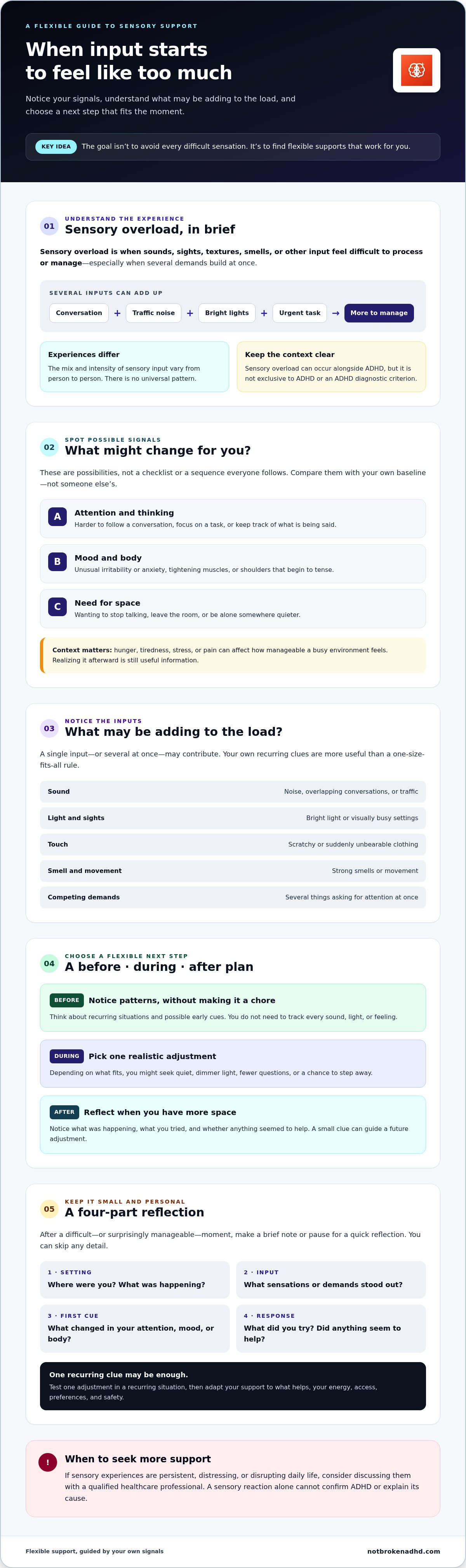
Sensory overload is when sounds, sights, textures, smells, or other input feel difficult to process or manage, especially when several demands build at once. A conversation beside traffic, bright lights, and an urgent task can each add to the load. The Sensory overload overview describes the experience and its possible links with other conditions. The exact combination and intensity vary from person to person.
ADHD can shape how someone experiences and responds to their environment, but not everyone with ADHD experiences sensory overload. The examples below may help you put words to what you notice. They aren’t a diagnostic checklist, and noticing one or more doesn’t identify a cause.
What sensory overload may feel like in everyday life
In a noisy room, you might lose the thread of a conversation or find it hard to focus on a task. After a busy day, you may want quiet, dimmer light, or fewer questions for a while. Some people notice frustration or anxiety; others notice attention slipping, muscles tightening, or an urge to leave. These are possibilities, not signs everyone shares.
Sometimes the shift is obvious. Sometimes it only makes sense in hindsight. Noise, bright light, crowded spaces, scratchy clothing, strong smells, and competing demands may each contribute, particularly when several occur together. You might not notice the strain until your capacity feels used up. That’s useful information, not a failure to spot a signal sooner.
Is sensory overload unique to ADHD?
No. Sensory overwhelm can occur for different reasons and across different experiences. The DSM-5-TR’s ADHD criteria focus on patterns of inattention and/or hyperactivity-impulsivity; sensory overload itself isn’t an ADHD diagnostic criterion. A sensory reaction alone can’t confirm ADHD or reveal what’s causing it.
If sensory experiences are persistent, distressing, or disrupting daily life, consider discussing them with a qualified healthcare professional. They can help explore your concerns in context. Meanwhile, noticing which inputs tend to build, and how you feel afterward, can offer a starting point for choosing ADHD sensory overload strategies that fit your needs.
How to recognize your sensory overload signals before they build
You don’t have to track every sound, light, or feeling. The aim is to get curious about moments when input starts taking more effort to manage than usual. A pattern may become clearer over time, and there’s no score to reach or perfect way to notice it.
Which early signs might tell you input is adding up?
Early cues can be subtle. You might find it harder to follow a conversation, feel unusually irritable, or notice your shoulders tightening. Later, you may want to stop talking, leave the room, or be alone somewhere quieter. These are examples, not a universal sequence. Compare them with your own baseline, rather than with someone else’s experience.
Context matters, too. Hunger, tiredness, stress, or pain can affect how manageable a busy environment feels. If you only realize you were overloaded once you need to withdraw, that still counts as useful information. You can reflect afterward, when you have more space.
How to identify patterns without creating another chore
Keep it small. After a difficult or surprisingly manageable moment, make a brief note on your phone or pause for a quick reflection. You might record:
- Setting: Where were you, and what was happening?
- Input: Was there noise, bright light, touch, movement, or several demands at once?
- First cue: What changed in your attention, mood, or body?
- Response: What did you try, and did anything seem to help?
You don’t need to fill in every detail. One recurring clue, such as tension after a long stretch in a noisy space, may be enough to guide a small adjustment. The Attention Deficit Disorder Association also shares practical ADHD sensory overload strategies; use suggestions as ideas to consider, not rules you have to follow.
If it’s helpful to explore how ADHD experiences can differ, the interactive ADHD experience guide offers optional educational context. It isn’t an assessment. For more self-guided learning, you can also browse ADHD educational resources and choose what feels useful to you.
ADHD sensory overload strategies compared by trigger and setting
A helpful adjustment depends on what feels intense, where you are, and what’s practical in the moment. Reducing input may help, but it isn’t the only option: some people prefer gentle movement or predictable stimulation. Treat ADHD sensory overload strategies as personal experiments, not guaranteed fixes.
| Trigger | Possible adjustment | When it may help | Limitation to consider |
|---|---|---|---|
| Sound | Move farther from the noise, choose a quieter spot, or try ear protection. | Background conversation or sudden sounds make it hard to focus. | Blocking sound may affect safety or make it harder to hear people who need your attention. |
| Bright or harsh light | Adjust a lamp or screen, sit away from glare, or take a brief pause in a softer-lit area. | Glare or bright spaces are tiring or distracting. | You may not control the lighting, and dimming it may make tasks harder to see. |
| Touch or clothing | Loosen a layer, change position, or choose a more comfortable fabric when possible. | A seam, label, or repeated contact is pulling your attention. | Changing clothes or avoiding contact may not be practical in every setting. |
| Movement | Try a short walk, a stretch, or a small, predictable movement. | Sitting still feels difficult or movement helps you stay engaged. | Space, mobility, and task demands can limit what’s workable. |
| Crowded or visually busy spaces | Choose a seat near an edge, face away from activity, or take a quieter route or break. | People, motion, or competing visual details feel distracting. | Privacy, accessibility, and work or school demands may narrow your choices. |
What can help when sound, light, or touch feels intense?
Start with a small change that doesn’t require buying anything: step away from a speaker, shift out of direct glare, or pause somewhere quieter. Optional aids, such as ear protection, may suit some situations, but they’re not essential and won’t fit every person or setting. Before reducing sound or other input, consider whether you need to hear alerts, traffic, or a conversation.
Research summarized by CHADD discusses ADHD and sensory sensitivity, including sensitivity to touch. That context can be useful, but individual preferences still matter. One person may want less input; another may find steady movement or familiar background sound more comfortable.
What can you try in a busy public place or at work?
If there’s room to choose, try a lower-stimulation route, an edge seat, or a brief break location. A simple phrase can make stepping away easier: “I need a quiet moment. I’ll be back shortly.” If leaving isn’t possible, consider one small adjustment, such as turning away from visual activity or asking to move seats. You may have limited privacy or control, so use what’s realistic and safe.
A before-during-after plan for sensory overload moments
A plan doesn’t need to prevent overwhelm or work perfectly. Its purpose is to make one next step easier to remember when attention and energy are low. Use only the parts that fit your situation, and change them as you learn what helps.
How can you prepare for predictable high-input situations?
Think of one event, transition, or environment you already find demanding, such as a busy commute, a long meeting, or a crowded shop. Choose one realistic adjustment ahead of time: a quieter place to pause, a lower-stimulation route, or someone you could contact if you need support. Keep the plan short enough to recall without extra effort.
Use this sequence as a starting point. Save it, adapt it, or choose just one step:
- Before: Name the likely pressure point. Decide on one adjustment or, if possible, where you could take a break.
- During: Focus on the simplest feasible next step. Reduce one source of input, ask for a small change, or move somewhere safer if you can.
- After: Give yourself time to recover. Later, note what was happening and what helped, without judging yourself for needing space.
What should you do during and after overwhelm?
In the moment, safety comes first. If you can, move away from immediate hazards before looking for a quieter or less demanding spot. You don’t have to explain everything. Try a plain phrase such as, “I need a brief break,” or “Could we move somewhere quieter?” If leaving isn’t possible, one small change may still be an option.
Recovery can look different from one person to another. You might need quiet, fewer demands, or time before returning to a task. That isn’t something you have to earn. Once you feel steadier, a brief reflection can help you adjust your plan for next time. You don’t need to review every detail or turn recovery into another task.
These ADHD sensory overload strategies are flexible prompts, not rules. If sensory difficulties substantially disrupt daily life, consider discussing them with a qualified healthcare professional. For self-guided support with planning and adapting routines, explore executive-function educational resources.
Build a sensory support plan that fits your real life
A useful sensory support plan doesn’t need to cover every situation. Start with one recurring moment, such as a busy commute or a noisy work area, and choose one adjustment to try. The best ADHD sensory overload strategies are the ones you can access and feel comfortable using in that setting, with your energy, preferences, and safety in mind.
How do you know whether a strategy is worth keeping?
After trying an adjustment, ask yourself a few simple questions: Was it practical to use? Did it reduce strain, even a little, or help you stay involved in what mattered? You don’t need a formal log. A quick mental check or short note is enough.
If the result is unclear, change one part next time when practical. For example, try a different seat while keeping the rest of your routine the same. A strategy may help in one place and not another. That doesn’t mean you failed; the setting, available choices, or your needs may have changed.
Planning can take effort, too. If you’d like related support for structuring routines and adapting plans, explore these executive functioning strategies. Use what fits, and leave the rest.
When might extra support be useful?
If sensory distress persists or substantially disrupts daily life, consider talking with a qualified healthcare professional. They can help you explore your concerns in context. An educational website can offer general information, but it can’t diagnose you or provide individualized clinical care.
There’s no single plan you need to get right. Keep what supports your comfort or participation, adjust what doesn’t, and give yourself room to learn at your own pace.
For more self-guided learning, explore The ADHD Field Guide and its educational resources. They’re intended to support learning, not to diagnose or treat sensory overload.
Take one small step toward a calmer setup
Sensory overload can look different from one person to another, so noticing your own early cues is more useful than following a rigid checklist. A quieter spot, a small environmental adjustment, or a chance to pause may help, depending on the trigger and what’s available to you.
Think of ADHD sensory overload strategies as options to test, not rules you have to get right. Choose one approach for a familiar situation, then notice whether it makes that moment more manageable. If it doesn’t fit, you can adapt it. Needing recovery time is not a failure.
If you’d like to keep learning, The ADHD Field Guide offers educational tools, downloadable ADHD resources, and interactive simulations that can help you explore neurodivergent experiences. These resources support learning, not diagnosis or treatment. Explore practical ADHD educational resources at your own pace.
Small adjustments count. You can build a support plan one useful discovery at a time.
Frequently Asked Questions
What are ADHD sensory overload strategies?
ADHD sensory overload strategies are practical adjustments that may make intense or competing input easier to manage. The right option depends on your needs and setting. You might move to a quieter spot, adjust lighting, choose more comfortable clothing, or take a brief pause. Notice what tends to help, but treat strategies as personal experiments, not guaranteed fixes. You don’t need to use every approach or follow a rigid plan.
Can ADHD cause sensory overload?
ADHD can occur alongside sensory sensitivity, but sensory overload isn’t a core ADHD diagnostic criterion, and not everyone with ADHD experiences it. Loud sounds or busy surroundings may feel difficult for some people, while others may not find them overwhelming. A sensory experience alone can’t confirm ADHD or explain its cause. If the pattern is persistent or affects daily life, a qualified healthcare professional can help you explore it in context.
What should I do during sensory overload?
Start with the simplest safe step available: reduce one source of input, pause, or move to a less intense place if you can. You might say, “I need a brief break,” or ask to turn down the sound. Consider whether blocking input could affect your safety or communication. Once the moment passes, allow time to recover. You don’t have to judge yourself for needing a pause or support.
How can I prevent sensory overload in public?
You may not be able to prevent every overwhelming moment, but a small plan can make public settings more manageable. Before you go, consider likely pressure points and choose one realistic option, such as a quieter route, an edge seat, or a place to pause. During the outing, adjust what you can. Privacy, access, and other demands may limit your choices, so use only the steps that fit.
Do noise-canceling headphones help with ADHD sensory overload?
Noise-canceling headphones may help some people reduce distracting background sound, but they aren’t necessary or suitable for everyone. Earplugs or moving away from the noise may be alternatives, depending on the setting and your preference. Before using anything that blocks sound, consider whether you need to hear traffic, alarms, or other people. If you rely on hearing cues for safety or communication, choose an option that preserves them.
When should I seek professional help for sensory overload?
Consider speaking with a qualified healthcare professional if sensory distress is persistent, causes significant distress, or disrupts daily activities, relationships, work, or school. They can discuss your experiences in context and help you consider what support may be appropriate. An educational resource can offer general information, but it can’t diagnose you or provide individualized clinical care. Seeking help is a reasonable step, not a sign that you’ve failed to cope.
Can sensory overload happen without ADHD?
Yes. Sensory overwhelm can happen without ADHD and may relate to different experiences or circumstances. It can also vary with factors such as stress, tiredness, pain, or the environment. A reaction to bright lights or crowded spaces doesn’t, by itself, identify a specific condition. If it keeps happening or interferes with everyday life, consider discussing it with a qualified healthcare professional rather than trying to determine the cause from one experience.


